

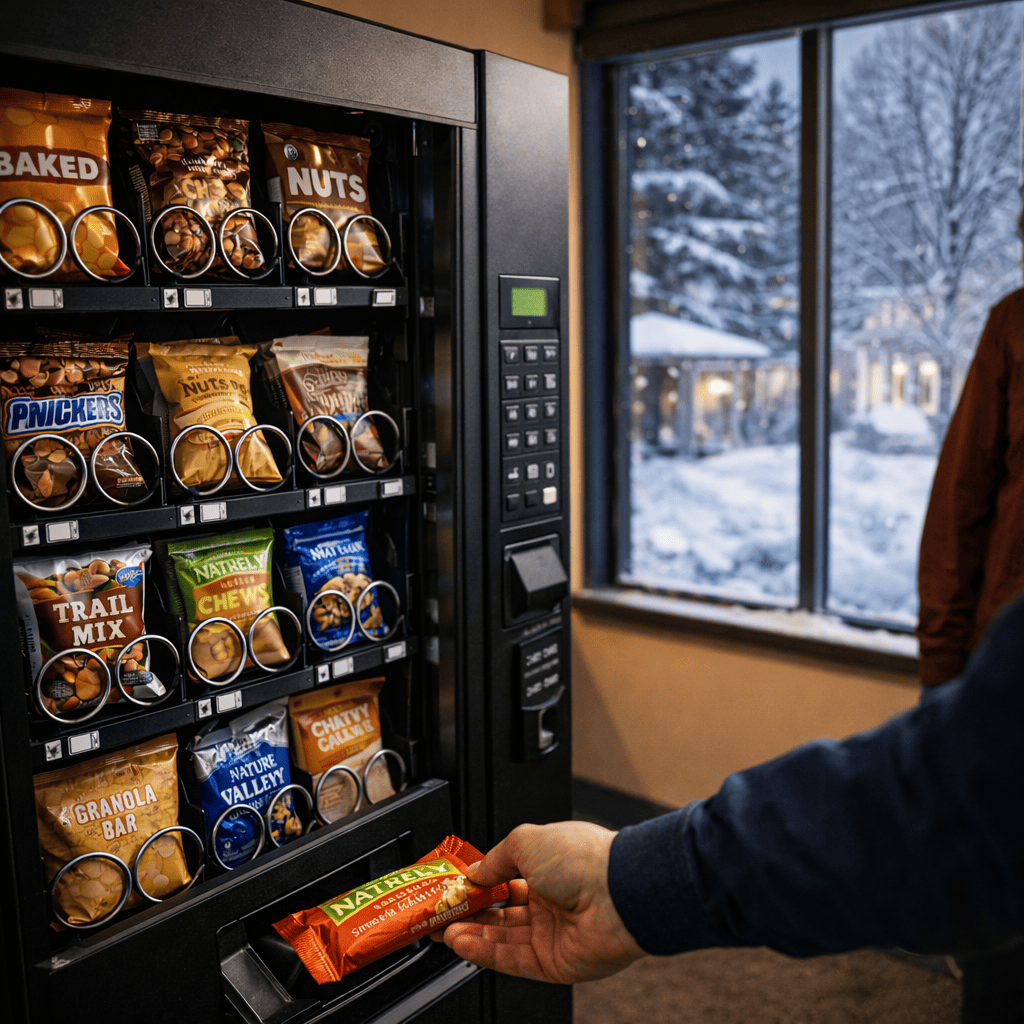
Winter changes small daily decisions, and snack choices are one of the first places you can feel it. When temperatures drop, people tend to choose comfort over novelty. They look for something that feels warmer, more filling, and more familiar, especially during a short break at work. In many workplaces, winter also adds a second layer: fewer people want to step outside for a quick run to a store, and more people want to solve the moment fast and get back to their day. That is why the snack mix inside a vending machine becomes more than a convenience. It becomes a reliable fallback for teams that are trying to stay on pace.
Still, winter comfort does not automatically mean any richer, sweeter, or heavier snack will perform well. Vending has its own reality, and snacks either work in that reality or they do not. Working means the item holds up in a machine, stays presentable, and delivers a consistent experience for the person who buys it. A snack can sound perfect for winter and still create friction if it crushes easily, crumbles into a mess, leaks, melts due to internal machine warmth, or leaves strong odors in a shared workspace. Those details seem minor until they trigger complaints, reduce repeat purchases, and increase wasted product.
The last winter-focused post framed why onsite vending matters more when going outside is the last thing people want to do. This guide takes the next step and focuses on the snack mix itself: which types of comfort snacks match winter cravings while still staying practical for vending. If you manage an office, a facility with long shifts, or any space with steady foot traffic, the goal here is simple: make better snack decisions without guessing, and without chasing seasonal hype that does not translate into real-world performance.
To keep the logic connected to cold-weather behavior, this article builds from the same winter context discussed in Winter in Allentown: Why Onsite Vending Matters When It Is Freezing Outside.
From there, we move into a clear checklist and category-based examples. As you think about stability and storage, it also helps to understand what shelf-stable means in plain terms and why it matters for restocking routines, as outlined by USDA Food Safety and Inspection Service.
What it really means to work well in a vending machine
If winter comfort is the goal, vending performance is the constraint. That constraint is not about taste. It is about whether a snack can be stocked, vended, and consumed repeatedly without creating friction for the people buying it or the people responsible for the space.
A snack works well in vending when it checks four boxes at the same time: it stays stable, it stays intact, it stays clean, and it stays consistent. In winter, those boxes matter even more because demand increases and expectations get sharper. People are choosing vending precisely because they want something easy. If the experience feels messy, unreliable, or disappointing, they are less likely to buy again.
Handling temperature swings inside and around the machine
Even in winter, a vending machine does not live in a perfectly cold environment. Many machines sit indoors with steady heat, near entrances with bursts of cold air, or in break rooms where temperature shifts happen throughout the day. On top of that, machines generate their own internal warmth. So a snack that seems winter-friendly can still run into issues like softening, sweating, oil separation, or texture changes over time.
This is where shelf stability becomes more than a label. It becomes a practical filter. Shelf-stable items are designed to be safely stored at room temperature, which reduces risk when conditions are not perfectly controlled. The USDA Food Safety and Inspection Service breaks down what shelf-stable means and why it matters for storage and handling.
For winter comfort snacks, the goal is not to chase anything that feels warm. The goal is to pick items whose texture and structure do not collapse when they experience mild heat, repeated handling, and long dwell time in a machine. Think in terms of behavior, not marketing: does it stay firm, does it stay visually appealing, does it stay pleasant to eat after sitting for days, not minutes.
Packaging strength and product durability
A vending machine is a mechanical environment. Products drop, shift, press against spirals, and ride through restocking. That means packaging quality is part of the product, not a separate detail. A snack can be the perfect comfort pick, but if the wrapper tears easily, the seal fails, or the bag inflates and pops, the experience breaks fast.
Durability matters in three ways:
- First, structural integrity. Snacks that crush easily, like delicate cookies or thin crackers, can become mostly crumbs by the time they are bought. That can feel like a bad purchase even when the flavor is good.
- Second, oil and filling management. Many comfort snacks are richer. Richer often means more oils, coatings, or fillings. If those migrate, leak, or smear inside the packaging, the snack looks and feels less premium, and it can leave residue in the machine that attracts complaints.
- Third, vend reliability. Some products get stuck more often because of their shape, weight distribution, or packaging friction. When that happens, people feel like they wasted money, even if the machine eventually refunds. In the real world, that experience reduces trust and lowers repeat purchases.
This is also why the operational side of vending matters. When you have a true full-service model, product issues, machine adjustments, and restocking are monitored and corrected as part of ongoing service. That is the operational backbone described here: Full-Service Vending: How It Works and Why It Saves You Time.
Cleanliness, odor, and workplace fit
Comfort snacks should feel like a break, not like a problem someone needs to clean up. In offices, clinics, and shared spaces, mess and odor can quietly kill a snack’s long-term performance. Even if people buy it once, they might not buy it again if it leaves crumbs on keyboards, grease on hands, or a lingering smell in a small room.
A snack is vending-friendly when it minimizes:
- Crumbs that travel. Flaky textures can taste great, but they often spread. If the snack breaks apart easily, it increases cleanup, and it also makes the eating experience less convenient.
- Grease transfer. Comfort snacks often come with richer coatings or oils. Greasy hands are a real barrier in workplaces where people go straight back to tasks.
- Strong odors. Some savory comfort options can dominate a room quickly. That can be fine in one environment and a deal-breaker in another. The key is not banning bold flavors, it is placing them where they fit and balancing them with neutral options.
The takeaway is simple: winter comfort snacks should feel satisfying without creating side effects. The moment a snack creates extra effort, it stops being a comfort choice and starts being a risk.
The pillars of a winter comfort mix
A winter comfort mix is not about stuffing the machine with heavier snacks. It is about building a lineup that matches winter cravings while still behaving well in a vending environment. The easiest way to do that is to think in pillars. Each pillar answers a different reason people buy snacks in winter: the feel, the flavor, and the moment.
If you get those three right, you usually see two things happen naturally: fewer complaints about messy or disappointing items, and less guesswork when it is time to rotate products.
Texture and satiety: crunchy, chewy, and creamy
Texture is one of the fastest ways people judge whether a snack feels comforting. In winter, crunchy still matters, but many people also lean toward chewy and creamy textures because they feel more filling and slower to eat. That matters at work, where snacks are often used as a small reset between tasks.
For vending, the key is to choose textures that stay stable over time.
Crunchy can be a strong winter performer when it is built to resist crushing. Think sturdy chips, baked snacks, thicker crackers, pretzels, and puffed snacks that keep their structure. Crunchy can fail when it turns into dust. So the question is not will people buy crunchy, it is will this crunchy product still feel like a real snack after sitting in a machine and being handled during restocking.
Chewy is where winter comfort really shows up. Chewy bars, soft-baked items, and certain protein-forward options often feel more satisfying than a quick sugar hit. But chewy needs two filters: it cannot become sticky or messy, and the packaging needs to open cleanly. If it is a snack that feels like it fights the wrapper, it stops being comforting.
Creamy is trickier in vending because creamy usually means coatings, fillings, or fat-based textures. Those can still work, but they need smart packaging and a stable product structure. The goal is that dessert-like feeling without the downside of smears, softening, or residue.
A practical way to balance textures is to avoid building a lineup that is all one experience. If everything is crunchy, winter comfort can feel thin. If everything is chewy, the mix can feel heavy and repetitive. If everything is creamy, you risk mess and maintenance issues. A solid winter mix usually has a deliberate spread across these textures, so different people can find their version of comfort without the machine feeling one-note.
Sweet, savory, and functional without extremes
Winter cravings often push sweet higher, but a winter mix should not become a candy shelf. Most workplaces have at least three groups of buyers: people who want a treat, people who want something salty, and people who want something that feels like a better choice without sacrificing satisfaction.
Sweet comfort can be done well when it feels like a treat but stays portion-controlled and tidy. The goal is that dessert cue, not a sugar spike that leaves people looking for more food 20 minutes later. You will see this again in the next section when we break down categories, but the principle is simple: choose sweet items that feel complete as a snack, not just a quick taste.
Savory comfort is often the backbone of winter vending because it aligns with satiety. People doing physical work, long shifts, or high-focus tasks often lean salty in winter because it feels more substantial. Savory can also reduce the feeling that vending is only indulgent food, which helps the machine fit better in professional spaces.
Functional does not mean diet. It means snacks that solve a practical need: protein-forward items, fiber-forward options, nuts, mixes, and bars that feel filling. The mistake here is going too extreme. If the functional options feel like punishment, they do not move. If they taste great but create mess or odor, they annoy the space. The sweet spot is functional snacks that still feel like comfort food, especially in winter when people want warmth and familiarity.
The most reliable balance is a mix that allows indulgence without becoming only indulgence. That keeps sales consistent across different preferences and helps reduce the classic problem where a machine performs well with one group but gets ignored by everyone else.
Portion size and snacking moments
In winter, people snack differently because the day feels tighter. Breaks can be shorter, the motivation to leave the building is lower, and snacks are more likely to replace a small meal or bridge a longer gap between meals.
That is why portion strategy matters as much as product type.
Quick break portions should feel satisfying in 5 to 7 minutes without leaving crumbs everywhere. This is where compact, clean snacks win. People want something that fits into a short pause and does not demand a full cleanup routine.
Long shift portions need to hold someone longer. This is where more filling options, nuts, mixes, and sturdier savory snacks typically shine because they feel like real fuel. If you do not have enough of these, winter vending can start to feel like it only offers small treats, which pushes people back to bringing snacks from home or skipping vending entirely.
Meeting-friendly portions are their own category. In winter, snacks often show up in group settings. Items with low odor, low mess, and easy open packaging perform better here. Even if they are not the top seller in a warehouse, they can be essential in offices or clinics.
A practical way to refine portion choices is to use simple restocking signals, not opinions. If an item sells but creates mess, it will generate friction over time. If an item sits, it might be the wrong portion for that environment. If you track what moves by location and by season, you can rotate with confidence instead of guessing. This approach is explained in Data-Driven Restocking Without Talking Products.
Practical list: winter snacks that often perform well
Winter vending usually rewards snacks that do two things at once: they feel comforting and they behave predictably. The categories below are less about specific brands and more about the product types that tend to hold up in machines, keep the eating experience clean, and still match what people crave when it is cold.
One helpful lens here is what many snack reports keep circling back to: consumers want both nutrition and indulgence, and they choose snacks intentionally depending on the moment. That pattern shows up in broader snacking research and is a big reason why a winter lineup performs best when it is not all candy or all protein. Reference: Consumers Balance Nutrition and Indulgence in Snack Behaviors.
Dessert-like bars that do not turn into a mess
Why they work in winter
Bars feel like comfort without requiring a full meal. In winter, they also match the vibe of coffee breaks and longer stretches between meals. If you choose the right structure, they can deliver that dessert cue while staying tidy and consistent.
What tends to perform well
- Chewy bars with a firm base that do not crumble into dust
- Soft-baked style bars that stay intact and do not shed crumbs everywhere
- Portion sizes that feel complete, not tiny add-ons that lead to a second purchase out of dissatisfaction
What to watch out for
- Heavy coatings and fillings that can smear if the product warms slightly inside the machine
- Wrappers that tear easily or open awkwardly, which makes the snack feel low quality even when it is not
- Bars that become rock hard over time, which can happen in low-humidity indoor environments
Nuts and mixes that match winter cravings
Why they work in winter
Nuts and mixes naturally deliver satiety, which is a core winter driver. They also work across settings: office, warehouse, gym, clinic. They feel like real fuel, not just a treat.
What tends to perform well
- Nut-forward mixes with a balanced ratio of nuts to extras so it does not become mostly sweet bits
- Single-serve packs that feel substantial without being oversized
- Options that offer variety in texture, like nuts plus something crunchy or chewy
What to watch out for
- Packages that are hard to open or that leave oil residue on the outside
- Mixes with fragile components that become crumbs and dust
- Very strong flavors that can be polarizing in small shared spaces
Baked snacks, chips, and more filling savory options
Why they work in winter
Savory comfort often becomes the backbone of winter vending. Salty, crunchy snacks tend to sell steadily because they scratch the comfort itch without feeling overly sweet. They also pair well with hot drinks and can feel like a mini meal replacement in a pinch.
What tends to perform well
- Thicker chips and sturdier baked snacks that resist crushing
- Pretzels and similar formats that are low mess and easy to eat quickly
- Hearty, savory options that feel more substantial than airy snacks
What to watch out for
- Thin, fragile items that turn into crumbs after a restock cycle or two
- Snacks that leave greasy hands, which is a quiet deal-breaker in many workplaces
- Strong odor profiles that can dominate a room, especially in offices and clinics
Better-for-you options that still feel like comfort food
Why they work in winter
This category is not about dieting. It is about giving people an option that feels satisfying without leaning fully into sugar or heavy indulgence. In many locations, these are not the top seller, but they protect overall vending performance by serving a meaningful segment consistently.
What tends to perform well
- Protein-forward snacks that still taste familiar, not overly functional or chalky
- Whole-food leaning options that feel hearty and warm-adjacent, like certain nut-based or grain-based formats
- Items with a clean eating experience, minimal crumbs, minimal residue
What to watch out for
- Overly niche health items that move slowly and create dead inventory
- Products that taste like compromise, because winter is when people have the least patience for that
- Packaging that looks too clinical, which can reduce impulse buys
Adjustments by location type
The same winter comfort categories can perform very differently depending on where the machine lives. That is why a solid winter mix is never one-size-fits-all. The goal is to match snack behavior to the environment so the lineup feels natural, stays clean, and keeps moving without constant tinkering.
A simple way to think about it is this: every location has a dominant constraint. Offices tend to be constrained by cleanliness and shared-space etiquette. Warehouses tend to be constrained by satiety and speed. Gyms and clinics tend to be constrained by label awareness and routine-driven choices. If you stock against the wrong constraint, you can end up with snacks that look great on paper but sit untouched in real life.
If you want a quick reference for how different spaces typically need different vending setups and product considerations, this guide can help: How to Choose the Best Vending Machine for My Place.
Offices and corporate spaces
Office winter snacking is usually about comfort without disruption. People want something satisfying that fits into a short break and does not create a mess at a desk. In these environments, the best winter comfort snacks are the ones that feel cozy and complete but still look and eat cleanly.
What to prioritize in offices:
- Low mess formats that do not shed crumbs everywhere
- Low odor choices that will not dominate a small break room
- Wrappers that open easily and do not require scissors or two hands and a prayer
- Portion sizes that feel satisfying without being heavy or nap-inducing
What usually underperforms in offices:
- Fragile items that crush into crumbs by the time they are purchased
- Anything that leaves oily residue on hands, especially in keyboard-heavy workplaces
- Strong savory flavors that can be polarizing in small shared spaces
A practical office-friendly winter mix often leans on sturdy savory snacks, a few dessert-like bars that stay tidy, and a tight set of better-for-you options that still feel like comfort rather than diet food.
Warehouses, plants, and long shifts
In facilities with long shifts, winter comfort is less about polite snacking and more about real fuel. People want something that feels filling, fast, and worth the money. If the lineup looks too light, sales drop because snacks stop feeling like a solution.
What to prioritize in long-shift environments:
- Higher satiety options that can bridge time between meals
- Savory anchors that feel substantial and repeatable
- Durable packaging that survives high turnover and frequent restocks
- Formats that are easy to eat quickly without needing napkins or a sink
What usually underperforms in long shifts:
- Tiny portion sizes that feel like a tease rather than a break
- Overly niche health items that do not taste familiar
- Snacks that crumble into dust and frustrate people who are eating on the move
In winter, these locations often do best when the lineup includes more filling savory choices and nut-forward options, with sweet items present but not dominating the planogram.
Gyms, clinics, and reception areas
These spaces are different because snack decisions are often more intentional. People are more likely to scan labels, look for protein, and pick snacks that align with routine. At the same time, winter still increases the desire for comfort, so the mix should not feel overly strict.
What to prioritize in these environments:
- Better-for-you options that still taste familiar and satisfying
- Protein-forward snacks that do not feel chalky or clinical
- Clean eating experiences with minimal crumbs and minimal greasy hands
- A small number of indulgent comfort picks for balance, not a full candy shelf
What usually underperforms here:
- Anything that feels random or overly processed without a clear reason to buy it
- Strong odors in tight waiting areas
- Messy snacks that create cleanup problems in reception spaces
A strong winter mix for these locations tends to be balanced on purpose: enough comfort to feel human in cold weather, enough functional options to match the setting, and enough cleanliness to keep the space pleasant.
How to rotate the mix without guessing
A winter lineup should not be static from November to March. Taste fatigue is real, and winter cravings shift as people settle into routines. Early winter is often driven by novelty and comfort. Mid-winter is more about consistency and reliable favorites. Late winter can swing back toward lighter choices as people start thinking ahead to spring. If the mix never changes, you risk boredom. If it changes too aggressively, you risk dead inventory and a noticeable drop in sales.
The goal is controlled rotation. You want enough stability that people can count on their favorites, and enough freshness that the machine still feels relevant.
The 70-20-10 rule for stability and novelty
This is a simple framework that works well in vending because it respects what vending is: convenience plus predictability.
- 70% core performers. These are your winter bestsellers. They move consistently and generate the least friction. The machine should always feel stocked with these, because they anchor repeat purchases.
- 20% seasonal support. These are items that match winter cravings and fill gaps in the lineup, even if they are not the absolute top sellers.
- 10% test items. This is where you experiment without risking performance. New flavors, new formats, or better-for-you options you are not sure will move.
Why this works: People do not want to relearn the machine every week. They want a few reliable choices plus some variety. The 70-20-10 structure gives you that while keeping the operational side manageable.
Early signals that a product is not working
You do not need to wait for complaints to know a snack is failing. In vending, the earliest signals are usually visible in patterns of movement and maintenance.
- Slow movement compared to similar items. If one sweet bar sells and a similar bar sits, it is rarely random. It can be portion perception, flavor preference, packaging appeal, or texture.
- Repeat vend issues. If the product gets stuck, tilts, or does not drop cleanly, it becomes a trust problem.
- Visible damage during restocking. If you consistently see crushed corners, torn packaging, or broken product, the item is telling you it is not designed for that environment.
- Mess and residue around the machine. Even if people keep buying a snack, if it increases cleaning needs, it creates friction for the location.
The practical winter rotation mindset is this: protect your core, refresh your supporting cast, and test in small doses. That is how you keep the machine feeling seasonal without making the lineup unstable.
Common questions from people who decide the snack mix
Most winter snack decisions come down to the same tension: people want comfort, but the location needs the machine to stay clean, consistent, and broadly appealing. The best mixes do not try to force everyone into one definition of good. They make room for different preferences without turning the lineup into chaos.
Can you offer comfort and better-for-you options at the same time
Yes, and winter is actually when this balance matters most.
The mistake is treating better-for-you as a separate corner of the machine that looks and feels disconnected from everything else. In winter, people still want comfort, so better-for-you options have to feel satisfying, familiar, and easy. That usually means choosing items that deliver satiety first, then health positioning second.
A simple way to make this work without overthinking it:
- Anchor comfort with savory and hearty formats
- Use better-for-you as alternatives to the same moment, not a different moment
- Keep indulgence intentional and portion-smart
The reason this works is that people do not snack for one reason. They snack for hunger, energy, routine, and mood, and those motivations shift throughout the day. Reference: International Food Information Council survey spotlight on snacking.
When should you change the mix during winter
If the machine is performing well, the goal is not frequent change. The goal is timely change.
Good moments to adjust the winter mix:
- After the first cold stretch, once routines settle
- When you see a clear split between fast movers and slow sitters
- When a product creates friction even if it sells, like mess, odor complaints, or vend issues
A practical cadence that works in many locations is light rotation, not a full reset. Keep the core stable, swap a small supporting set, and test one or two items at a time. That keeps the machine feeling fresh without turning the snack experience into a guessing game.
Conclusion
A winter comfort snack mix is not about making everything heavier. It is about matching cold weather behavior with snacks that stay stable, stay clean, and keep delivering a consistent experience after day one.
If you remember only a few things from this guide, let it be these:
- Comfort is a feeling, and that feeling comes from texture, satiety, and familiarity
- Vending performance is practical, and it depends on durability, packaging, and cleanliness
- Different locations need different emphasis, even when categories are the same
- Rotation should be controlled, so you protect your core while testing safely
When winter makes leaving the building less appealing, vending becomes the quick solution people lean on. The snack mix is what determines whether they come back again tomorrow.
FAQ: Winter snacks for vending machines
1) What winter snacks work best in vending machines
The best winter snacks for vending machines are the ones that feel filling and stay clean and stable: sturdy savory snacks, nut-forward packs, and dessert-like bars that do not crumble, smear, or cause frequent vend issues. Shelf-stable items reduce surprises when conditions vary.
2) How do I balance comfort snacks with better-for-you options in winter
Use a simple split: keep core comfort snacks as anchors, then add better-for-you alternatives that still feel satisfying, such as protein-forward or nut-based choices that taste familiar. This works because people snack for different reasons across the day, not just health.
3) Why do some comfort snacks fail in vending even during winter
Because vending is mechanical. Products get pressed in spirals, dropped, and handled during restocks. Items can crush, leak oils, or change texture with mild internal warmth. Even if they taste great, they can create mess, residue, and complaints that reduce repeat purchases.
4) How often should I rotate the snack mix during winter
Aim for light rotation, not full resets. Keep a stable core, swap a small set of supporting items after routines settle, and test 1 or 2 new options at a time. A 70-20-10 approach protects repeat purchases while preventing boredom.
5) Should the snack mix change depending on the location type
Yes. Offices typically need low mess and low odor choices. Warehouses and long shifts need higher satiety and fast, durable formats. Gyms and clinics tend to favor cleaner labels and protein-forward options, with a small comfort section for balance.