

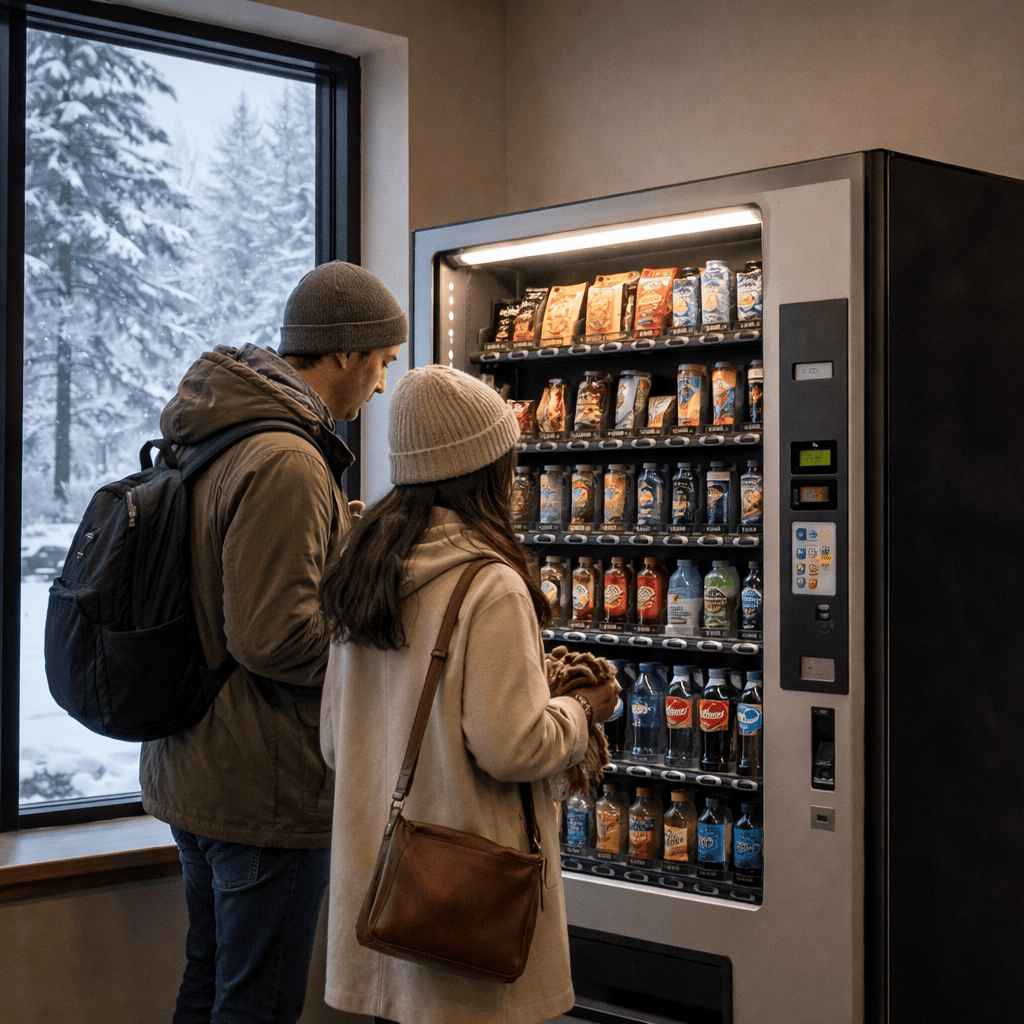
Winter in the Allentown area changes what convenience really means. In warmer months, stepping out for a coffee, a snack, or a quick lunch can feel like a harmless reset. In late January, it can feel like a negotiation with the elements. When the temperature drops into the teens, when wind makes it feel even colder, and when snow is on the table, even short trips outside become slower, less comfortable, and easier to postpone.
This matters because food decisions at work are rarely only about hunger. They are about timing, comfort, and how much effort it takes to solve a simple need. In winter, that effort increases. A quick run for a drink can become a longer break because of layers, icy walkways, car warmups, and slower roads. Multiply that by teams, shifts, and busy periods, and the friction becomes visible in productivity, routine stability, and the general rhythm of the workday.
In late January 2026, local reporting described the Lehigh Valley as living through its snowiest January in a decade, with repeated storms and persistent cold shaping day-to-day routines. The snow and cold pattern was not a one-day anomaly, it was a stretch of winter conditions that made even short trips outside feel less casual and easier to postpone.
That is where vending machines shift from a nice extra to a practical onsite option. Not as a replacement for meals or local restaurants, but as a reliable fallback that reduces winter friction. If someone forgot breakfast, is stuck between meetings, is working overtime, or simply wants something quick without bundling up and driving, onsite access changes the day. The convenience is not abstract. It is the ability to solve a basic need without turning it into a cold-weather errand.
Why Winter Changes Everyday Food Decisions at Work
Cold, wind chill, and the friction of leaving the building
In winter, the barrier is not only distance. It is the effort required to do something simple. Leaving a workplace for food becomes a sequence: bundling up, navigating slick entryways, warming up a car, and dealing with slower traffic. Even when the destination is close, the total break expands. That expansion is not always obvious in a single day, but it shows up over a month as more interruptions, more time away from work areas, and more people returning rushed.
Winter also changes decision timing. People tend to delay small trips until hunger becomes a bigger distraction. That can lead to less planned choices, longer breaks later, or people skipping food entirely until late afternoon. When the only easy option is offsite, the weather has more control over daily routines than most workplaces expect.
This is one reason vending becomes more valuable in cold months without needing to be framed as a perk. It is a low-friction option that aligns with how people behave when leaving the building feels costly.
Snow, road conditions, and unpredictable disruptions
Cold is consistent. Snow is disruptive. Even when a storm is not catastrophic, it changes how predictable the day feels. Commutes take longer, parking lots get messy, and some businesses adjust schedules quickly. Teams may stay onsite longer to avoid travel at the worst hours. Others arrive already drained from navigating conditions.
When the outside becomes unpredictable, onsite food access starts functioning like a small continuity tool. It reduces dependency on what is open, what is safe to drive to, and how much time someone must spend just to eat.
The Hidden Cost of Leaving the Workplace for Food in Winter
Lost time compounds fast in cold months
In winter, the cost of leaving the building is rarely just the drive. It is everything around it: layers, careful walking, car warmup time, window scraping, and slower roads. Even if the destination is close, the total break can quietly double. Multiply that across people, shifts, and weeks, and it becomes a real operational drag.
The key point is compounding. One long break is not a crisis. But repeated offsite trips across the day create more transitions, and transitions are where momentum disappears. Winter adds friction to every step, so the same routine that feels harmless in October becomes inefficient in January.
A reliable onsite option can reduce these repeated mini departures. When people can grab what they need inside the building, breaks stay shorter, schedules stay steadier, and the workday keeps its shape.
Safety and liability considerations for employers
There is also a practical risk element. The more people go in and out, the more exposure there is to icy walkways, wet entryways, and parking lots that can change quickly. The issue is not only major storms. It is the routine freeze-thaw cycle that creates slippery surfaces even on days that do not look dramatic.
From a business standpoint, reducing unnecessary trips is not only about comfort. It can also be viewed as reducing exposure points. Onsite access does not eliminate winter hazards, but it can reduce how often people need to interact with them during the workday.
Vending Machines as Winter Resilience Infrastructure
Vending is often discussed as convenience, but winter frames it more as reliability. The goal is not replacing meals or local restaurants. It is providing a consistent fallback for the moments when leaving the building feels inefficient, unsafe, or simply not worth it. A snack, hydration, or a quick grab-and-go option inside the facility helps people keep their routines without turning every hunger moment into a weather decision.
This matters most in workplaces where breaks are short or tightly scheduled: warehouses, medical offices, manufacturing, multi-tenant buildings, and any environment with early shifts or late crews. Winter makes offsite options less predictable, and the value of a dependable onsite option increases.
Supporting overtime, shift coverage, and storm driven travel restrictions
Winter also creates irregular schedules. People stay late to finish tasks before a storm, coverage shifts, and nearby food options may open late or close early. In these moments, availability matters more than ideal plans.
During the same January 2026 storm period, PennDOT published a statewide release ahead of heavy snow and urged drivers to avoid unnecessary travel. PennDOT restrictions release.
That is the practical context where onsite access becomes easier to justify: when agencies are actively discouraging travel, workplaces that can meet basic needs inside the building reduce avoidable trips and disruptions.
What a Winter Smart Vending Setup Should Offer
Comfort focused snacks and warm drink options
In the Lehigh Valley, winter changes what people reach for during the workday. When leaving the building feels like work by itself, the onsite option has to feel legitimate. Otherwise, people keep defaulting to offsite runs or skipping food until later.
A winter-smart setup performs best when it reflects what people actually want on freezing days: items that feel comforting, filling, and fast to grab. That can include classic salty snacks, heartier bars, and beverages that fit cold-weather routines. Hot beverage service can help in some locations, but it is not mandatory. The core requirement is a selection that people choose willingly when they are deciding whether to stay inside or brave the cold.
Better for you choices that still feel satisfying
Better for you does not mean forcing a health message. In workplace settings, the winning pattern is balance. People want options that feel satisfying but do not leave them sluggish. That often means protein-forward snacks, nuts, lower sugar choices, and items that work well between meetings or on the floor.
This matters because a vending program serves a mixed population. A single building can include office staff, shift teams, drivers, contractors, and visitors. A winter-smart mix makes room for different preferences without becoming overwhelming.
Quick meals for people who skipped lunch
Winter schedules get messy fast. Meetings run long, commutes eat into break windows, and shift coverage changes when weather disrupts staffing. In those moments, vending does not need to replace a cafeteria. It needs to prevent the scenario where someone leaves the building because there is nothing onsite that feels like enough.
Having a few more substantial options supports overtime, missed lunches, late arrivals due to weather, and short break windows. When the onsite option covers that gap, the workplace becomes more self-sufficient during winter weeks.
Placement and Experience: Making Convenience Actually Convenient
Placement is one of the biggest factors in whether vending actually reduces offsite trips. In winter, people are less willing to walk far inside the building, especially when they are tired, wearing layers, or trying to keep a short break short. A machine that is technically onsite but inconveniently located will not change behavior.
The best winter placements are where people already pass naturally: near break rooms, near common areas, or near the path between work zones and restrooms. In multi-tenant buildings, it also helps to place machines where multiple teams can access them without extra steps.
If the machine is not easy to reach quickly, it will not consistently replace offsite snack runs during winter.
Payment options that reduce friction
Winter is not the season where people want extra steps. If the goal is speed and minimal disruption, payment needs to be fast and familiar. Cashless options reduce micro-frictions that turn a quick purchase into a slow one, especially during shift changes or peak break moments.
This is a user-experience detail that maps directly to business value. When the transaction is smooth, vending stays in the category of quick solution. When it is annoying, people return to offsite habits even when it is cold.
Small experience details that keep the machine part of the routine
Vending becomes a habit when it feels dependable. Small details matter: clear visibility of products, a well-lit location, consistent restocking, and a machine that does not feel like a gamble. In winter, people have less patience for friction because they are already dealing with friction outside.
Operations Behind the Scenes: Keeping Machines Reliable When It Is Freezing Outside
Winter demand is rarely steady. In warmer seasons, purchases often follow predictable rhythms. In winter, patterns become spikier. People buy more during cold snaps, they stock up before storm windows, and they rely more on onsite options when travel feels unpleasant or risky.
A winter-smart vending plan is not only about selecting products. It is also about anticipating higher demand during extreme cold periods and storm cycles. That shows up as higher par levels on reliable items and a restocking approach that can absorb short-term spikes.
Service, maintenance, and downtime planning
Winter is when reliability becomes the story. Even when machines are indoors, severe conditions can affect service routes, delivery timing, and response windows. The operational question is simple: when something goes wrong, how quickly does it get fixed and who owns the problem.
On January 26, 2026, the National Weather Service Mount Holly office issued a cold-weather alert that called out very cold wind chills and warned about hypothermia risk if precautions are not taken. Cold Weather Advisory.
That type of advisory is the real-world signal of why winter changes behavior: short exposure becomes less reasonable, and unnecessary travel becomes easier to avoid when basic needs are available onsite.
For a practical internal reference that matches common business-owner search intent, see What happens when a vending machine breaks.
A Practical Decision Framework for Business Owners
Questions to ask before installing a machine
A decision framework keeps the conversation grounded in outcomes. In winter, the outcome is straightforward: reduce unnecessary trips outside and keep the workday predictable.
Useful questions include:
- How many people are onsite per day, and how does that change by shift
- Do teams work early, late, or overnight, when nearby food options are limited
- Do people leave the building for snacks and drinks, or do they skip because it is inconvenient
- Where is the highest-traffic indoor area that is warm, visible, and easy to access
- What mix is most realistic for your workforce: snacks, beverages, and a few more filling options
- What payment methods do people expect so the machine does not become a bottleneck
A simple internal reference that answers common objections is 5 most common questions about renting a vending machine.
Measuring success without overcomplicating it
You do not need complex analytics to know whether vending is solving the winter problem. The best signals are behavioral and operational: fewer offsite snack runs on cold days, shorter breaks, steadier energy through late afternoon, fewer complaints about onsite options, and consistent usage during storm weeks.
Success in winter is simple: the onsite option becomes the default because it is easier than leaving.
Convenience That Matters More When the Weather Is Harsh
Allentown winters make small errands feel heavier. Cold air, wind chill, icy walkways, and storm disruptions turn a quick snack run into something people delay, avoid, or regret. That shift is predictable, and it is why onsite access matters more in January than it does in June.
Workplace vending machines, when stocked with winter-relevant choices and placed where people actually walk, function like practical resilience. They reduce unnecessary trips outside, support overtime and shift coverage, and help keep routines steadier when the forecast is working against everyone.